


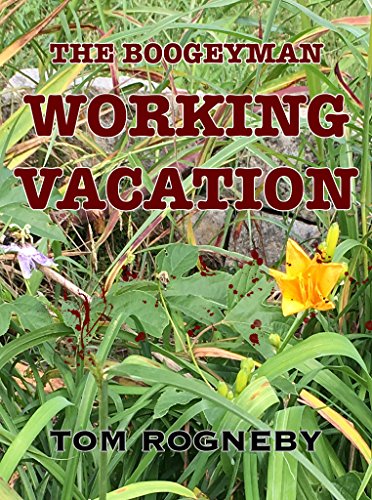


- This weekend I travelled to the wilds of Tennessee and attended LibertyCon 29. This was the first such gathering I’ve been to since I was 18. I must say I had a lot more fun this time.
- Of course, anything is better than listening to 30- and 40-somethings argue with teenagers about whether Picard or Kirk made the better starship captain.
- There were people there who like all kinds of different things attending the con, and I didn’t see any evidence of drama or bad behavior.
- Please, thank you, and excuse me were common. You’d think there would be a lot more socially challenged individuals wandering about, but if there were, they adapted quite well to the situation.
- Seriously, even among the big-name authors, I saw no ego.
- With all of the interesting things I saw and great people I met, the highlight of the weekend was listening to Tom Kratman, OldNFO, and BRM tell war stories over tea.
- Next year, I’m definitely going to get a room at the convention’s hotel. The ability to go lay down for a little while will come in handy.
- I’ve found that having somewhere quiet to rest has become a very important day-to-day goal.
- I listened to the first half of Joe Haldeman’s “The Forever War” during the drive home today. Either this guy is psychic, or such things as the breakdown of civil society and the creation of the Taurus Judge were wholly predictable from the early 1970’s.
- He wasn’t spot on, though. A long-barrel, single-action .410 revolver is not going to blow somebody’s arm off. Then again, he might have had a vision of Taurus’ marketing campaigns.
All posts in category Uncategorized
Musings
Posted by daddybear71 on July 10, 2016
https://daddybearsden.com/2016/07/10/musings-203/
A Year of Poetry – Day 78
Though he, that ever kind and true,
Kept stoutly step by step with you,
Your whole long, gusty lifetime through,
Be gone a while before,
Be now a moment gone before,
Yet, doubt not, soon the seasons shall restore
Your friend to you.
He has but turned the corner — still
He pushes on with right good will,
Through mire and marsh, by heugh and hill,
That self-same arduous way —
That self-same upland, hopeful way,
That you and he through many a doubtful day
Attempted still.
He is not dead, this friend — not dead,
But in the path we mortals tread
Got some few, trifling steps ahead
And nearer to the end;
So that you too, once past the bend,
Shall meet again, as face to face, this friend
You fancy dead.
Push gaily on, strong heart! The while
You travel forward mile by mile,
He loiters with a backward smile
Till you can overtake,
And strains his eyes to search his wake,
Or whistling, as he sees you through the brake,
Waits on a stile.
— Robert Louis Stevenson, Consolation
Posted by daddybear71 on July 10, 2016
https://daddybearsden.com/2016/07/10/a-year-of-poetry-day-78/
Musings
- My mind has gone back and forth all day between “Wow, this is really great information!” to “Don’t be that guy!” to “Brains!!!!”
- Friends read your books. Good friends tell what they think of your books. Great friends help you write your books. Awesome friends present you with an exquisite dagger because they think a picture of it would make a great book cover.
- Work on the next Minivandians book continues. The short vignettes are finished, and the first 1/3 of the longer, more serious story is done. I’m telling the story of what happened to Ruarin and DaddyBear after the battle at the end of the first book. Hopefully, I’ll have it off to alpha readers by the end of August.
Posted by daddybear71 on July 9, 2016
https://daddybearsden.com/2016/07/09/musings-202/
A Year of Poetry – Day 77
1I love the LORD, because he hath heard my voice and my supplications.
2Because he hath inclined his ear unto me, therefore will I call uponhim as long as I live.
3The sorrows of death compassed me, and the pains of hell gat hold upon me: I found trouble and sorrow.
4Then called I upon the name of the LORD; O LORD, I beseech thee, deliver my soul.
5Gracious is the LORD, and righteous; yea, our God is merciful.
6The LORD preserveth the simple: I was brought low, and he helped me.
7Return unto thy rest, O my soul; for the LORD hath dealt bountifully with thee.
8For thou hast delivered my soul from death, mine eyes from tears,and my feet from falling.
9I will walk before the LORD in the land of the living.
10I believed, therefore have I spoken: I was greatly afflicted:
11I said in my haste, All men are liars.
12What shall I render unto the LORD for all his benefits toward me?
13I will take the cup of salvation, and call upon the name of the LORD.
14I will pay my vows unto the LORD now in the presence of all his people.
15Precious in the sight of the LORD is the death of his saints.
16O LORD, truly I am thy servant; I am thy servant, and the son of thine handmaid: thou hast loosed my bonds.
17I will offer to thee the sacrifice of thanksgiving, and will call upon the name of the LORD.
18I will pay my vows unto the LORD now in the presence of all his people,
19In the courts of the LORD’S house, in the midst of thee, O Jerusalem. Praise ye the LORD.
— Psalms, Chapter 116
Posted by daddybear71 on July 9, 2016
https://daddybearsden.com/2016/07/09/a-year-of-poetry-day-77-2/
A Year of Poetry – Day 76
Go on a starlit night,
stand on your head,
leave your feet dangling
outwards into space,
and let the starry
firmament you tread
be, for the moment,
your elected base.
Feel Earth’s colossal weight
of ice and granite,
of molten magma,
water, iron, and lead;
and briefly hold
this strangely solid planet
balanced upon
your strangely solid head.
— Piet Hein, Astro-Gymnastics
Posted by daddybear71 on July 8, 2016
https://daddybearsden.com/2016/07/08/a-year-of-poetry-day-77/
A Year of Poetry – Day 75
If I can stop one heart from breaking,
I shall not live in vain;
If I can ease one life the aching,
Or cool one pain,
Or help one fainting robin
Unto his nest again,
I shall not live in vain.
— Emily Dickinson, If I Can Stop One Heart From Breaking
Posted by daddybear71 on July 7, 2016
https://daddybearsden.com/2016/07/07/a-year-of-poetry-day-75/
A Year of Poetry – Day 74
The outlook wasn’t brilliant for the Mudville nine that day:
The score stood four to two, with but one inning more to play,
And then when Cooney died at first, and Barrows did the same,
A pall-like silence fell upon the patrons of the game.

A straggling few got up to go in deep despair. The rest
Clung to the hope which springs eternal in the human breast;
They thought, “If only Casey could but get a whack at that—
We’d put up even money now, with Casey at the bat.”

But Flynn preceded Casey, as did also Jimmy Blake,
And the former was a hoodoo, while the latter was a cake;
So upon that stricken multitude grim melancholy sat,
For there seemed but little chance of Casey getting to the bat.

But Flynn let drive a single, to the wonderment of all,
And Blake, the much despisèd, tore the cover off the ball;
And when the dust had lifted, and men saw what had occurred,
There was Jimmy safe at second and Flynn a-hugging third.

Then from five thousand throats and more there rose a lusty yell;
It rumbled through the valley, it rattled in the dell;
It pounded on the mountain and recoiled upon the flat,
For Casey, mighty Casey, was advancing to the bat.

There was ease in Casey’s manner as he stepped into his place;
There was pride in Casey’s bearing and a smile lit Casey’s face.
And when, responding to the cheers, he lightly doffed his hat,
No stranger in the crowd could doubt ‘twas Casey at the bat.

Ten thousand eyes were on him as he rubbed his hands with dirt;
Five thousand tongues applauded when he wiped them on his
     shirt;
Then while the writhing pitcher ground the ball into his hip,
Defiance flashed in Casey’s eye, a sneer curled Casey’s lip.

And now the leather-covered sphere came hurtling through the
     air,
And Casey stood a-watching it in haughty grandeur there.
Close by the sturdy batsman the ball unheeded sped—
“That ain’t my style," said Casey. “Strike one!” the umpire said.

From the benches, black with people, there went up a muffled
     roar,
Like the beating of the storm-waves on a stern and distant shore;
“Kill him! Kill the umpire!” shouted someone on the stand;
And it’s likely they’d have killed him had not Casey raised his
     hand.

With a smile of Christian charity great Casey’s visage shone;
He stilled the rising tumult; he bade the game go on;
He signaled to the pitcher, and once more the dun sphere flew;
But Casey still ignored it and the umpire said, “Strike two!”

“Fraud!” cried the maddened thousands, and echo answered
     “Fraud!”
But one scornful look from Casey and the audience was awed.
They saw his face grow stern and cold, they saw his muscles
     strain,
And they knew that Casey wouldn’t let that ball go by again.

The sneer is gone from Casey’s lip, his teeth are clenched in hate,
He pounds with cruel violence his bat upon the plate;
And now the pitcher holds the ball, and now he lets it go,
And now the air is shattered by the force of Casey’s blow.

Oh, somewhere in this favoured land the sun is shining bright,
The band is playing somewhere, and somewhere hearts are light;
And somewhere men are laughing, and somewhere children
     shout,
But there is no joy in Mudville—mighty Casey has struck out.

-- Ernest Lawrence Thayer, Casey at the Bat
Posted by daddybear71 on July 6, 2016
https://daddybearsden.com/2016/07/06/a-year-of-poetry-day-74-2/
A Year of Poetry – Day 73
Out of the night that covers me,
Black as the pit from pole to pole,
I thank whatever gods may be
For my unconquerable soul.
In the fell clutch of circumstance
I have not winced nor cried aloud.
Under the bludgeonings of chance
My head is bloody, but unbowed.
Beyond this place of wrath and tears
Looms but the Horror of the shade,
And yet the menace of the years
Finds and shall find me unafraid.
It matters not how strait the gate,
How charged with punishments the scroll,
I am the master of my fate,
I am the captain of my soul.
— William Ernest Henley, Invictus
Posted by daddybear71 on July 5, 2016
https://daddybearsden.com/2016/07/05/a-year-of-poetry-day-74/
Salute to the Union
Posted by daddybear71 on July 4, 2016
https://daddybearsden.com/2016/07/04/salute-to-the-union-2/
In Congress, July 4, 1776
IN CONGRESS, July 4, 1776.
The unanimous Declaration of the thirteen united States of America,
When in the Course of human events, it becomes necessary for one people to dissolve the political bands which have connected them with another, and to assume among the powers of the earth, the separate and equal station to which the Laws of Nature and of Nature’s God entitle them, a decent respect to the opinions of mankind requires that they should declare the causes which impel them to the separation.
We hold these truths to be self-evident, that all men are created equal, that they are endowed by their Creator with certain unalienable Rights, that among these are Life, Liberty and the pursuit of Happiness.–That to secure these rights, Governments are instituted among Men, deriving their just powers from the consent of the governed, –That whenever any Form of Government becomes destructive of these ends, it is the Right of the People to alter or to abolish it, and to institute new Government, laying its foundation on such principles and organizing its powers in such form, as to them shall seem most likely to effect their Safety and Happiness. Prudence, indeed, will dictate that Governments long established should not be changed for light and transient causes; and accordingly all experience hath shewn, that mankind are more disposed to suffer, while evils are sufferable, than to right themselves by abolishing the forms to which they are accustomed. But when a long train of abuses and usurpations, pursuing invariably the same Object evinces a design to reduce them under absolute Despotism, it is their right, it is their duty, to throw off such Government, and to provide new Guards for their future security.–Such has been the patient sufferance of these Colonies; and such is now the necessity which constrains them to alter their former Systems of Government. The history of the present King of Great Britain is a history of repeated injuries and usurpations, all having in direct object the establishment of an absolute Tyranny over these States. To prove this, let Facts be submitted to a candid world.
He has refused his Assent to Laws, the most wholesome and necessary for the public good.
He has forbidden his Governors to pass Laws of immediate and pressing importance, unless suspended in their operation till his Assent should be obtained; and when so suspended, he has utterly neglected to attend to them.
He has refused to pass other Laws for the accommodation of large districts of people, unless those people would relinquish the right of Representation in the Legislature, a right inestimable to them and formidable to tyrants only.
He has called together legislative bodies at places unusual, uncomfortable, and distant from the depository of their public Records, for the sole purpose of fatiguing them into compliance with his measures.
He has dissolved Representative Houses repeatedly, for opposing with manly firmness his invasions on the rights of the people.
He has refused for a long time, after such dissolutions, to cause others to be elected; whereby the Legislative powers, incapable of Annihilation, have returned to the People at large for their exercise; the State remaining in the mean time exposed to all the dangers of invasion from without, and convulsions within.
He has endeavoured to prevent the population of these States; for that purpose obstructing the Laws for Naturalization of Foreigners; refusing to pass others to encourage their migrations hither, and raising the conditions of new Appropriations of Lands.
He has obstructed the Administration of Justice, by refusing his Assent to Laws for establishing Judiciary powers.
He has made Judges dependent on his Will alone, for the tenure of their offices, and the amount and payment of their salaries.
He has erected a multitude of New Offices, and sent hither swarms of Officers to harrass our people, and eat out their substance.
He has kept among us, in times of peace, Standing Armies without the Consent of our legislatures.
He has affected to render the Military independent of and superior to the Civil power.
He has combined with others to subject us to a jurisdiction foreign to our constitution, and unacknowledged by our laws; giving his Assent to their Acts of pretended Legislation:
For Quartering large bodies of armed troops among us:
For protecting them, by a mock Trial, from punishment for any Murders which they should commit on the Inhabitants of these States:
For cutting off our Trade with all parts of the world:
For imposing Taxes on us without our Consent:
For depriving us in many cases, of the benefits of Trial by Jury:
For transporting us beyond Seas to be tried for pretended offences
For abolishing the free System of English Laws in a neighbouring Province, establishing therein an Arbitrary government, and enlarging its Boundaries so as to render it at once an example and fit instrument for introducing the same absolute rule into these Colonies:
For taking away our Charters, abolishing our most valuable Laws, and altering fundamentally the Forms of our Governments:
For suspending our own Legislatures, and declaring themselves invested with power to legislate for us in all cases whatsoever.
He has abdicated Government here, by declaring us out of his Protection and waging War against us.
He has plundered our seas, ravaged our Coasts, burnt our towns, and destroyed the lives of our people.
He is at this time transporting large Armies of foreign Mercenaries to compleat the works of death, desolation and tyranny, already begun with circumstances of Cruelty & perfidy scarcely paralleled in the most barbarous ages, and totally unworthy the Head of a civilized nation.
He has constrained our fellow Citizens taken Captive on the high Seas to bear Arms against their Country, to become the executioners of their friends and Brethren, or to fall themselves by their Hands.
He has excited domestic insurrections amongst us, and has endeavoured to bring on the inhabitants of our frontiers, the merciless Indian Savages, whose known rule of warfare, is an undistinguished destruction of all ages, sexes and conditions.
In every stage of these Oppressions We have Petitioned for Redress in the most humble terms: Our repeated Petitions have been answered only by repeated injury. A Prince whose character is thus marked by every act which may define a Tyrant, is unfit to be the ruler of a free people.
Nor have We been wanting in attentions to our Brittish brethren. We have warned them from time to time of attempts by their legislature to extend an unwarrantable jurisdiction over us. We have reminded them of the circumstances of our emigration and settlement here. We have appealed to their native justice and magnanimity, and we have conjured them by the ties of our common kindred to disavow these usurpations, which, would inevitably interrupt our connections and correspondence. They too have been deaf to the voice of justice and of consanguinity. We must, therefore, acquiesce in the necessity, which denounces our Separation, and hold them, as we hold the rest of mankind, Enemies in War, in Peace Friends.
We, therefore, the Representatives of the united States of America, in General Congress, Assembled, appealing to the Supreme Judge of the world for the rectitude of our intentions, do, in the Name, and by Authority of the good People of these Colonies, solemnly publish and declare, That these United Colonies are, and of Right ought to be Free and Independent States; that they are Absolved from all Allegiance to the British Crown, and that all political connection between them and the State of Great Britain, is and ought to be totally dissolved; and that as Free and Independent States, they have full Power to levy War, conclude Peace, contract Alliances, establish Commerce, and to do all other Acts and Things which Independent States may of right do. And for the support of this Declaration, with a firm reliance on the protection of divine Providence, we mutually pledge to each other our Lives, our Fortunes and our sacred Honor.
The 56 signatures on the Declaration appear in the positions indicated:
Column 1
Georgia:
Button Gwinnett
Lyman Hall
George Walton
Column 2
North Carolina:
William Hooper
Joseph Hewes
John Penn
South Carolina:
Edward Rutledge
Thomas Heyward, Jr.
Thomas Lynch, Jr.
Arthur Middleton
Column 3
Massachusetts:
John Hancock
Maryland:
Samuel Chase
William Paca
Thomas Stone
Charles Carroll of Carrollton
Virginia:
George Wythe
Richard Henry Lee
Thomas Jefferson
Benjamin Harrison
Thomas Nelson, Jr.
Francis Lightfoot Lee
Carter Braxton
Column 4
Pennsylvania:
Robert Morris
Benjamin Rush
Benjamin Franklin
John Morton
George Clymer
James Smith
George Taylor
James Wilson
George Ross
Delaware:
Caesar Rodney
George Read
Thomas McKean
Column 5
New York:
William Floyd
Philip Livingston
Francis Lewis
Lewis Morris
New Jersey:
Richard Stockton
John Witherspoon
Francis Hopkinson
John Hart
Abraham Clark
Column 6
New Hampshire:
Josiah Bartlett
William Whipple
Massachusetts:
Samuel Adams
John Adams
Robert Treat Paine
Elbridge Gerry
Rhode Island:
Stephen Hopkins
William Ellery
Connecticut:
Roger Sherman
Samuel Huntington
William Williams
Oliver Wolcott
New Hampshire:
Matthew Thornton
Posted by daddybear71 on July 4, 2016
https://daddybearsden.com/2016/07/04/in-congress-july-4-1776/
DaddyBear


