• Archives

  • Topics

  • Meta

  • The Boogeyman - Working Vacation
  • Coming Home
  • Via Serica

Shame

A person who wears a uniform was convicted recently of murdering Afghan civilians and sentenced to life in prison with the possibility of parole.  This individual was apparently part of a unit that participated in murdering civilians, mutilating the bodies of Afghans, using drugs in the field, and beating up a soldier who reported the behavior.

You’ll notice I didn’t use the title “soldier” to describe this cretin.  A soldier is someone who accepts the responsibilities of the uniform and acts accordingly.  The military has a very clearly defined set of rules to live by, and this guy didn’t even come close.  He’s not a soldier, he’s just a guy in a green suit, and now he wants us to believe that after having some time to think it over, he believes that what he did in Afghanistan is wrong.

What he and his partners in crime did violated the trust of the nation they swore to serve.  Yeah, I’m not a fan of how the war in Afghanistan has been fought, or the goals that have been set for it, but in no way do I think that targeting non-combatants, brutalizing other soldiers, and using drugs in a combat zone can be excused under any circumstances.

What this guy and the bunch of savages he led did was deserving of much more than he or any of them will get.  I’m proud of my service and the service of my family stretching back to the Civil War.  These people put a stain on our uniform.  I’m always overly critical of soldiers who break the law, because I feel that they should be held to a higher standard of conduct than the average citizen.

This guy should be executed in full view of his unit so that they, and the entire world, know that we hold ourselves, and especially our soldiers, responsible for what they do.

Memories

  • The bite of gravel into my palms as I did my best to push Missouri back into the ground, along with 200 of my closest friends
  • The feeling of accomplishment the first time I qualified expert on the M-16
  • The rush I got the first time I did an Australian rappel
  • Sunset at the Asilomar
  • Coming out of the building in Augsburg and realizing I hadn’t seen the sun in 6 weeks
  • The sound of a little girl crying because I had told her her mother hadn’t survived
  • Sunrise over the Chiracahuas
  • 6 inches of snow in an hour over a convoy of diplomatic cargo in Russia
  • Laying in a snowbank on top of Mount Vis
  • The color and smell of the earth in that field near Mostar
  • Watching young soldiers learn what my team was teaching them
  • Night driving my track
  • The taste of red dirt on four continents.  Seriously, did the Corps of Engineers do a study to find all of the places on earth where there is red clay just so they could send me to visit all of them?
  • The weight of the hanger on the day I hung up my uniform for the last time

Shameful

The Air Force has reported that, at least for a time, some of the cremated remains of servicemembers killed overseas ended up in landfills.  These include parts of bodies that cannot be identified or those that families preferred to have the DOD take care of.

Basically, the remains were cremated, then put into containers, and handed over to a landfill company for disposal.  The company, by the way, denies knowing that the remains were in the materials it disposed of.

This shameful way of handling the ashes of our fallen soldiers has been replaced with a simple burial at sea by the Navy, which is, in my humble opinion,  much more fitting than being thrown in the heap with the old banana peels and kitty litter.

The military says that this practice ended in 2008, and a full investigation has caused the disciplining of several workers at Dover Air Force Base, where the military runs its main mortuary service for the wars in Iraq and Afghanistan. 

My question is this:  What in the hell was the leadership at DOD and Dover thinking?  I wouldn’t send the ashes of my dog to the landfill, much less that of another human being, regardless of whether or not it’s a soldier.  We owe all of our soldiers, sailors, airmen, and Marines a debt much higher than we can ever fulfill, and these actions spit on that debt. 

The military and civilian ‘leaders’ who thought this was an acceptable way to dispose of these remains need to be pilloried publicly.  Those who are entrusted with the bodies of our fallen, no matter how high in the command structure they are, need to be reminded that their burden is a sacred one.  Every man and woman who serves needs to know that their body  will be treated with respect at all times.

Remember

Stump Speech

This is a transcript of the speech that Vice-Presidential Candidate DaddyBear gave at the beginning of a town hall meeting held at the community center in Grand Forks, North Dakota.

Ladies and gentlemen, thank you for joining me here tonight.  I appreciate all of you making it out to speak with me in the face of weather like this.  Who would have thought there’d be a snow storm in North Dakota in March?  In saying this, I apologize for our campaign manager’s inability to look at a calendar.  Just kidding Harv!  For those of you don’t know him, Harv there at the back of the hall is our campaign manager.  Harv was a Marine sniper, and after the past few months, he’s started getting the thousand yard stare.

Anyway, before we open up the floor to your questions, I’d like to speak about something that’s become kind of a theme for Candidate X and me: The hard right over the easy wrong.

This is something that Candidate X and I learned while we served in our military, but it applies to just about everything we all do every day.  The principle is this:  It is better to choose to do the right thing, no matter how hard or painful it is, than it is to do the easy thing that happens to be the wrong thing to do.

Examples of this include choosing to save up money to buy a new refrigerator instead of putting one on credit and paying usurous levels of interest on it.  It could mean choosing to take hard sciences and engineering courses in college rather than getting a liberal arts degree so that when you graduate you are more likely to get that high paying job we all aspire to.

It can also mean living on what most Americans would consider a shoe-string budget in order to live within your means, even after you get that job with the big bucks, and save up enough money so that when bad things happen, you can stand on your own two feet.

In the military, one way that this was expressed was a tradition we had in the order in which our soldiers ate.  The lowest ranking soldier eats first, followed by the next up in rank, and so on until the unit commander eats last.  I was taught that this came out of a problem during World War I, where sometimes not enough food would be sent up to the front lines for everyone to eat as much as they wanted to, so some leaders were making sure they got their fill before allowing the lower soldiers access to the food.  What ended up happening was that the privates on the sticky end of the stick ended up not getting much to eat, or sometimes nothing at all, while the officers and senior NCO’s got their fill.  If you flip that and put the needs of your subordinates first, then you eat last, but you’ll make damn sure that there’s enough food for everyone.  It only takes a couple of times for a commander to eat half a cup of scraps before he starts raising hell to get more food sent up.

So that’s the hard right over the easy wrong.  You choose to do something that might be unpleasant because it is right, even though it might be much harder to do than doing the wrong thing, or doing nothing.

We bring this up because our country has been choosing the easy wrong for far too long in a lot of things.

  • Got poor people in your country?  It’s too hard to educate them so that they can compete for good jobs and to encourage industries that will employ them and pay them a days wage for a days work.  We’ll just print money and give them free stuff so they won’t have an incentive to get that education or find that good job.  
  • Got some gold plated piece of military hardware that you think you need, but if you’re honest, you’ll admit that you really just want it because it’s sexier than buying better rifles, or uniforms, or trucks, or ships, or fighter planes for your servicemembers that are an evolution of existing stuff?  Then make sure you spread the design and manufacturing around the country to get congressional support and get a fat contract out the door for something that might deliver in a decade.  It’s too hard to just replace and incrementally upgrade existing hardware, and besides, there’s not as much money in that.
  • Have companies that didn’t do the right thing, got themselves in a whole mess of trouble financially, and now are threatening to throw thousands of voters out of work just prior to an election?  Easy, just put the full faith and credit of the nation behind a select group of companies in order to make sure the factories and banks stay open, and we’ll figure out how to pay for it when the grandkids start paying taxes.  It’s too hard to look a CEO in the eye, call them a fool, and let the economy and the market figure it out.

What we’re saying is that we’ve been doing the wrong thing because it’s easier than taking our medicine and doing the right thing for so long that now all of the bills are coming due and we can’t pay them.  Our government’s debt is skyrocketing, and it will take decades to climb out of the hole it took decades for us to dig, even if we start now.

Ladies and gentlemen, it’s time for the grown-ups to take over again in America.  It’s time we got out of bed, looked ourselves in the mirror, admitted we can’t go on like this, and got on with the business of righting our countries financial ship.

We need to cut our spending as deeply and responsibly as we can.  We need to look at each and every line in the federal budget, assuming that we can get one in Congress this year, and not ask “Why should I cut this?” but rather “Will the country fail if I cut this?”.  If the answer to that question is No, then it needs to be taken out.  We need to be honest with ourselves about the limits of our ability to pay for everyone else on the planet, including our own able-bodied citizens.  We need to go back to the basics of government, and get rid of all the luxuries we’ve strapped onto the back of taxpayers since the Roosevelt administration.  We need to return the powers and responsibilities that the federal government has assumed to the state and local authorities wherever we can, and let them figure out how to do things in a way that works for their particular needs.

It’s not going to be easy, and it’s probably not going to be a lot of fun.  But it’s the right thing to do, and if any country can do it, it’s ours.  We draw from the traditions, cultures, and ideas of every country on the planet when we try to find solutions.  We are not beholden to centuries of “That’s just the way we do it here” inertial thinking, at least not yet.  If we don’t do it soon, we run the risk of losing our ability to remember that there is a better way, and we have the ability, the right, and the responsibility to change.

Thank you for your patience and your time.  Let’s switch this over to the question and answer part of this shindig.  And just to answer the questions that always seem to be come up at these things, let me just say these things to begin with:

  1. Dressing right
  2. On my right hip, at about 3:30
  3. 1911
  4. .45 ACP
  5. Minnesota Vikings or Washington Redskins
  6. I don’t like the designated hitter
  7. Like I like my women:  Strong and Sweet

So, what are your questions?

Props to the Navy

The U.S. Navy announced recently that it is drumming out 64 sailors who were caught using and/or selling a form of synthetic marijuana.  Use of other drugs, such as cocaine and meth, was also found in the investigation. 

Y’all should know by now that I’m a proponent of legalization of at least the milder drugs that are currently verboten in our country.  I think the government needs to butt out of our private lives, let the states regulate what they want and don’t want happening within their borders, and spend the money saved on either cutting budgets or doing something that’s actually productive. 

But that feeling doesn’t involve the military.  Period. Dot.

In the civilian world, for the most part, one day is much like the last and the next.  Most people don’t have an expectation that in the blink of an eye, every part of their world could change from boredom to bedlam with a distinct risk of someone getting maimed or killed.*

Not so with the military, whether they’re deployed or stateside, off-duty or on.  Things happen in the world, and when they do, we have to know that our soldiers, sailors, marines, and airmen are ready to go without hesitation.  Yeah, service members drink, but unless you’re blind drunk, you’re not going to get someone killed in the hour or two it takes for you to sober up.  If you’re high, stoned, tripping, or wired you’re going to take much longer with many more after effects that will put your mission and the people who depend on you in danger.

Bad things happen in our world every day with little to no warning for the military:

  • Pearl Harbor
  • The Battle of the Bulge
  • The Tet Offensive
  • USS Cole
  • Khobar Towers
  • 9/11
  • Fort Hood

And the list goes on and on.  What they all have in common is that there was no warning and no way for servicemembers to plan on when they could get high and not impact their unit when tasked to respond to them.

I cannot imagine a sailor on an aircraft carrier underway being high.  How would he respond to a fire or accident on the flight deck?  How would he be able to help in damage control parties?  How could he safely do his job when the inevitable sudden change in work schedule happens?

So, and this hurts a lot for me to say, good for the Navy. 

*Yeah, I know, such an expectation is the bedrock upon which all self-defense thinking lies, but I expect that someone who’s taking responsibility for their own safety isn’t going to eat a hash brownie and concealed carry to the grocery store for Crunch n Munch.

Rethinking

Yesterday, I commented on a young lady of Muslim faith who has been told that she cannot wear the hijab with her JROTC uniform.  I took the position that AR 670-1, which governs the appearance of soldiers and how they wear their uniforms, needed to be upheld.  I also felt that if the Army said there would be no exceptions for wearing religious articles that could be seen in uniform, then she should either hang up her ACU’s or conform. 

But after I wrote that, a little voice in the back of my head kept bugging me.  I half-remembered that other religious groups had, on a case by case basis, been given exceptions to the uniform standards.

So I did a little digging, and I found something.

The Army has given at least three Sikhs who wanted to serve an exception to AR 670-1.  They have been allowed to go without the normal haircut or shaving, and have been allowed to wear a black turban in place of a beret and a camouflage turban under their helmet.  Reports are that the soldiers have done well, and are not looking for exceptions to other standards or special treatment.

So it is possible for members of our society who have religious beliefs that require them to have overt, visible manifestations of those beliefs to serve. 

Now that I realize this, my opinion on the case of this young woman changes.  If other people can have an exception made, so long as they conform in every other way, why can’t an exception be made for practicing Muslim women to wear a hijab?

Above and beyond the fairness issue here, there’s a more practical issue at stake.  The military is fighting wars in the mid-East, and will be in one way or another for the foreseeable future.  By encouraging loyal Americans who happen to be Muslim into our armed forces, we become better prepared to fight those wars.  Muslims would probably know more about the culture and language of the countries we will be fighting in, and their knowledge can be leveraged to improve the training of other soldiers.  This is similar to the thousands of Eastern European immigrants who served during the Cold War, or descendents of German immigrants who served in the World Wars. 

So my point is that if the Army can make an exception for Sikhs, why not Muslims?  The armed forces could gain by making inroads into a community with unique skills and knowledge that could be used to improve their effectiveness in wars, and it only seems fair.  That being said, the young lady in question, and other Muslims who want to serve but still wear a hijab, should consider following the example of the Sikh soldier I linked to, and wear headgear that blends in with the rest of her uniform.

What do y’all think?

Trouble in Perpetual Motion

An unnamed contributor over at Skippy’s List describes how an industrious dolt is always more dangerous than a lazy genius:

No more than maybe fifteen minutes go by and I hear my team leader screaming again, “what the f*** are you doing?!” There sits a very confused soldier getting his ass handed to him again. Somehow in the last fifteen minutes he had forgotten that the user name and password were labeled on the keyboard in front of his face, and got frustrated that his network log in wasn’t working. To remedy this he decided the issue was that there was no Ethernet cable plugged in so he found one and tried to plug it in, but then he noticed an obstruction in the port so he whipped out his trusty Gerber and removed it. He then commenced to try and log into the network with an unauthorized computer…our Ethernet switch was just down and we had to move offices.

(Edited for language.)

I hope that the soldier in question was put on human waste destruction detail for a while.

Reminds me of my first job in military IT.  I was tasked with crawling under the floors of our facilities to find unauthorized modems and telephone cables.  Seems that someone had been caught connecting a modem and unsecure telephone line to his classified work computer so that he could work on his classified reports at home, so we had to do a phyisical audit of all of our buildings to make sure no-one else had done it.  Nothing like the deep-lung irritation of 30 year old dust under 18 to 24 inch high suspended floors to make that morning PT run a real picnic.  At least the only critters I found were old snake skins.  Big ones.  Like make me jump up through the floor tiles whether there’s a hole there or not big.  Ahhh, memories.

Never Leave a Man Behind

On October 3 and 4, 1993, Operation Gothic Serpent, also known as the Battle of Mogadishu happened.  U.S Army Rangers, Delta Force, and helicopters from the 160th Special Operations Air Regiment began the day on what should have been an easy snatch and grab mission. By the time the sun set the next day, 19 Americans would be dead, 91 would have been wounded, and 1 would be a prisoner of war.  History was made that day in a way that no-one could have imagined when the helicopters lifted off.

When the Somalia relief mission was announced, our brigade commander came through our battalion looking for people who could speak Italian, French, or Arabic.  He didn’t even ask if anyone spoke Somali.  Volunteers who were accepted were sent off to augment the combat forces as translators.  This was the first of the “Christiane Amanpour Operations” where political leaders reacted to CNN programming showing people suffering by sending in combat troops.  See also Haiti, Bosnia, and Kosovo.  We all thought the U.S. was getting involved to save people from starving.  None of us thought that Presidents Bush and later Clinton would let the mission creep into determining who would have power in that little country.  It was that mission creep that led to Gothic Serpent.

Anyway, I was a Russian/German linguist, so my volunteering was graciously turned down.  I later had to have a moment of irate counseling with our company clerk who told my wife that I’d tried to volunteer, causing a moment of irate counseling from my wife when I got home that evening.  I should have known at that exact moment that being married to her and being a soldier were mutually exclusive concepts.

When the Battle of Mogadishu happened, we watched CNN for details, because information from official channels was a few days behind.  Several members of my unit had been sent, but none of them took part in the fighting until the relief column finally got in on the second day of the battle.  Luckily, none of the were hurt.

Somalia should have been a wake-up call to us.  It was the first hint that the Middle East and Northeast Africa would be a problem for us as we assumed the self-assigned role as the sole remaining superpower.  Unfortunately, we didn’t see it for what it was and continued preparing to refight the Korean War and Operation Desert Storm until 2001.

The men who fought in Mogadishu fought in a way that their fathers and grandfathers did in World War II, Korea, and Vietnam:  cut off against numerically superior foes with little to no support.  Almost all of the technological advantages American forces normally enjoy were gone, and they survived only because they refused to stop fighting.  No matter what they were before the fight, they were heroes by its end.  These warriors fell back on training and mutual support when the world fell in on them.  We owe them and all like them a debt that I fear can never be repaid.

H/T to Miguel at Gun Free Zone for reminding me of the date.

Anything For a Brother

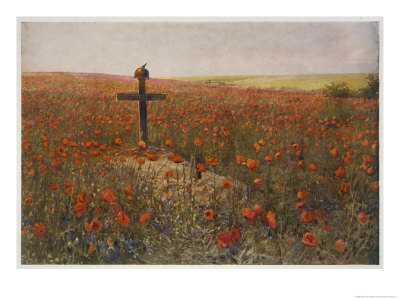
This past April, the day before his wedding anniversary, a United States Marine lost his life in a field in Afghanistan.  One of his buddies noticed that his wedding ring was missing, and began searching the field for it.  He was exposed to enemy fire in a place where two men had already been killed, and he combed the dirt of a poppy field for a circle of metal less than two inches across.

Why would he do something like that?  His friend was already dead, and nothing was bringing him back.  Every moment he spent out in that field was a moment when he could cross someone’s sight picture.  My guess is that he did it because he would want his own sacred momentos to be returned to his family.  Maybe it’s a ring, or a crucifix, or the photos of children that soldiers will tuck into their uniforms so that they always have them, but he would want them taken back to his loved ones.

For whatever reason, this brave, foolish, loving man spent hours searching for it, and eventually he was successful.  Yesterday, he returned to Texas, and brought the ring with him.  He and other Marines who served together returned it to the young lady who lost a husband that day.

Warriors don’t always come home.  But those who serve with them make sure their families can lean on them, even if it’s just to get back a part of their soul that fell in the dust of a faraway farm field.